Your First Conker Tournament: A Beginner's Step-by-Step Guide
Your first conker tournament will be over faster than you expect. You queue, you get handed a string, you take three swings at a stranger's conker, and then you're either pocketing a smashed husk or a story. Nothing about the day is complicated once you know how it fits together. What follows is the practical version: what to enter, what to pack, how matches actually run, and how to behave so the organisers are pleased to see you again next autumn.
Before You Go: Choosing Your Entry
Start by finding out what kind of event you're walking into. Village fetes, pub leagues, charity days and dedicated conker clubs all run competitions, and their rulesets differ more than you'd think. Ask three questions at the point of registration:
- Which category? Most events offer open singles, plus pairs or doubles, junior age brackets, and sometimes a veterans' heat or a novice draw. If there's a first-timers' or novice category, enter it. The pace is gentler and nobody is arriving with a carefully aged conker collection.
- Whose conkers? Some tournaments supply standard conkers to everyone on the day. Others expect you to bring your own. This changes your whole week's preparation, so find out before you start drilling holes.
- How do I register? Many events take entries in advance online, with a limited number of on-the-day places. Pre-registering saves you standing in a queue that snakes past the cake stall.
Turn up with a little time in hand and some cash, since card readers are unreliable at a folding table in a field.
If you're bringing your own conkers
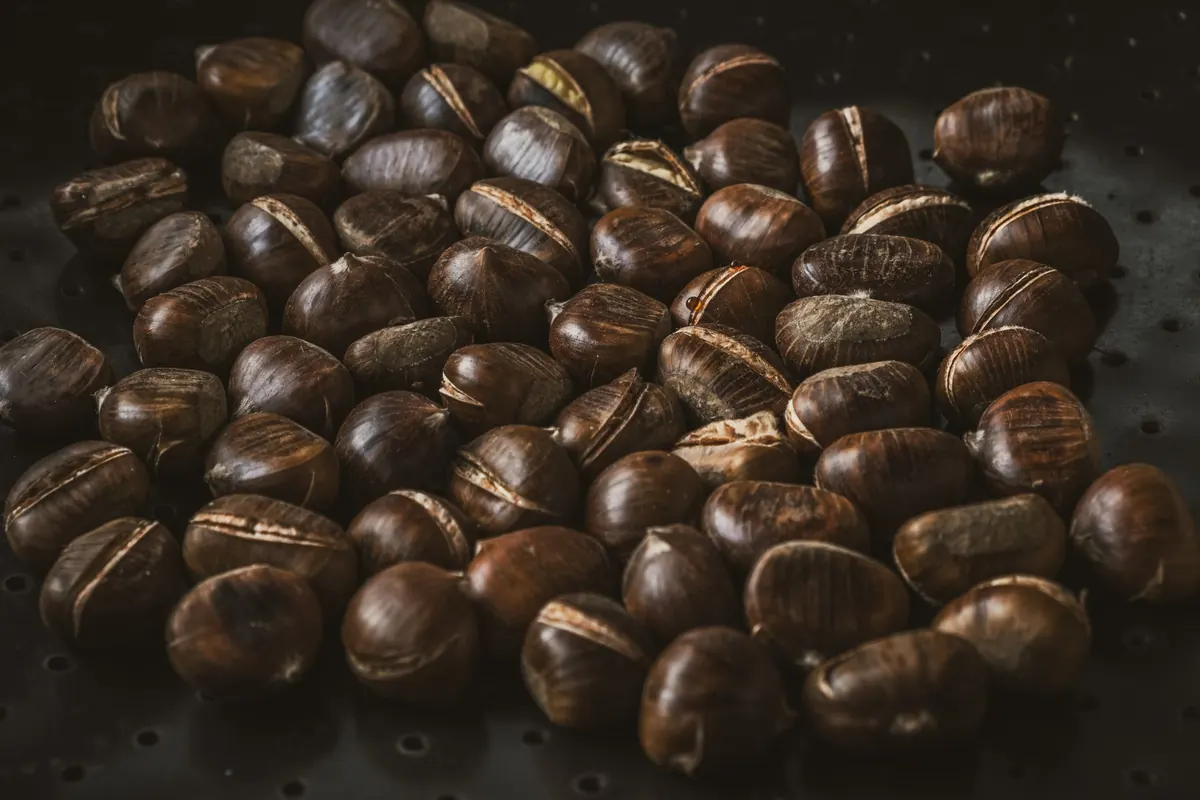
Choose five or six rather than one. Pick firm, round, freshly fallen conkers with no cracks, soft patches or dark rings. Drill or pierce a clean hole straight through the centre — a small drill bit, a bradawl or a sturdy skewer all work — then thread your string and knot it securely. Check the tournament's rule on string length, because they vary and marshals do measure.
Ignore most of what you've read about hardening. Baking a conker makes it brittle and easy to split. A firm conker, a straight swing and not flinching are worth more than any kitchen trick.
What to Bring
A short kit list covers almost everything a local event will throw at you:
- Six or more conkers, plus spare string and a spare lace
- A small awl, skewer or drill for last-minute threading
- Closed-toe shoes and a waterproof layer — most events are outdoors
- Water, a snack and a folding chair if you're staying for the afternoon
- Cash for entry and the raffle
- A plastic bag for broken conkers, which you will accumulate
- Your phone, to photograph the draw sheet so you know where you're meant to be
- A friend who is happy to hold your drink and your spares
How Matches Work
Two players, one conker each on a string. You take turns to strike. The striking player holds their own string taut and swings down at the opponent's conker, while the opponent holds theirs steady and lets it hang. When your turn ends, you swap roles.
Matches are short — usually two or three minutes. Most heats end the moment a conker breaks, and the owner of the surviving conker goes through. Some events run best-of-three or timed rounds in the early stages because the queue behind you is long. Listen carefully at the briefing rather than assuming you know the format.
The usual flow on the day
- Check in and confirm your category and name spelling.
- Attend the briefing, where the ruleset and any local variations are read out.
- Find your pitch and your first opponent from the draw sheet.
- Shake hands and settle who strikes first, usually by toss or by the draw.
- Alternate hits until a conker breaks or the marshal calls the round.
- Report the result to the registration desk, then wait for your next name.
Two rules that catch out beginners
First, you must let your conker hang free. Pulling it away as your opponent swings is a foul, and it's the fastest way to lose the goodwill of a referee. Second, there is no stamping, no twisting the string around a finger, and no sawing at the string with the conker's edge. Swings are downward and clean.
Conkers are hard and a misjudged swing stings. Keep fingers and faces clear of the striking zone, particularly when children are playing nearby.
How to Behave on the Day
The etiquette is simple and it matters more than most newcomers expect. Shake hands before and after every match. Stay quiet and well back while others are playing. Don't coach someone else's child unless you're asked.
When a marshal makes a call, accept it. Even if you are certain your conker was still intact, arguing costs you the room and changes nothing. If you win, keep it short: "Good match" is enough. If you lose, mean it when you say it — a broken conker after a good strike is not an injustice.
Offer your spares. If someone's only conker shatters in the first round and the tournament allows own conkers, handing over one of yours is the single easiest way to become popular. Offer to help stack chairs at the end, too. Volunteers run these events, and they remember the people who made it lighter.
What to Expect From Your First One
You will probably not win. That isn't pessimism; it's the normal experience of a first tournament, and it takes nothing away from the day. Set yourself a better goal: play three matches cleanly, keep your swings straight, learn how fast the rounds move, and watch the better players for a few minutes.
Afterwards, write down one thing you'd change — a shorter string, a firmer conker, standing further back, not flinching. Then enter the pairs event next time, because doubles is where beginners learn fastest. And read next year's rules before you spend an evening with a drill. Most of the advantage is in a tight string, a steady hand and turning up.
Photo: sharonang / Pixabay