The History of Conkers: From Horse Chestnuts to World Championships
The History of Conkers: From Horse Chestnuts to World Championships
Somewhere between the first split husk of September and the last soggy conker of November, a small piece of folk engineering happens. A child finds a good horse chestnut, pokes a hole through it with a skewer, threads a bootlace and ties a knot. That is a game older than most playgrounds, and it has survived school bans, television cameras and a stretch of bad years for the trees. Here is how a nut you cannot even eat ended up with its own world championship.
A Tree That Travelled
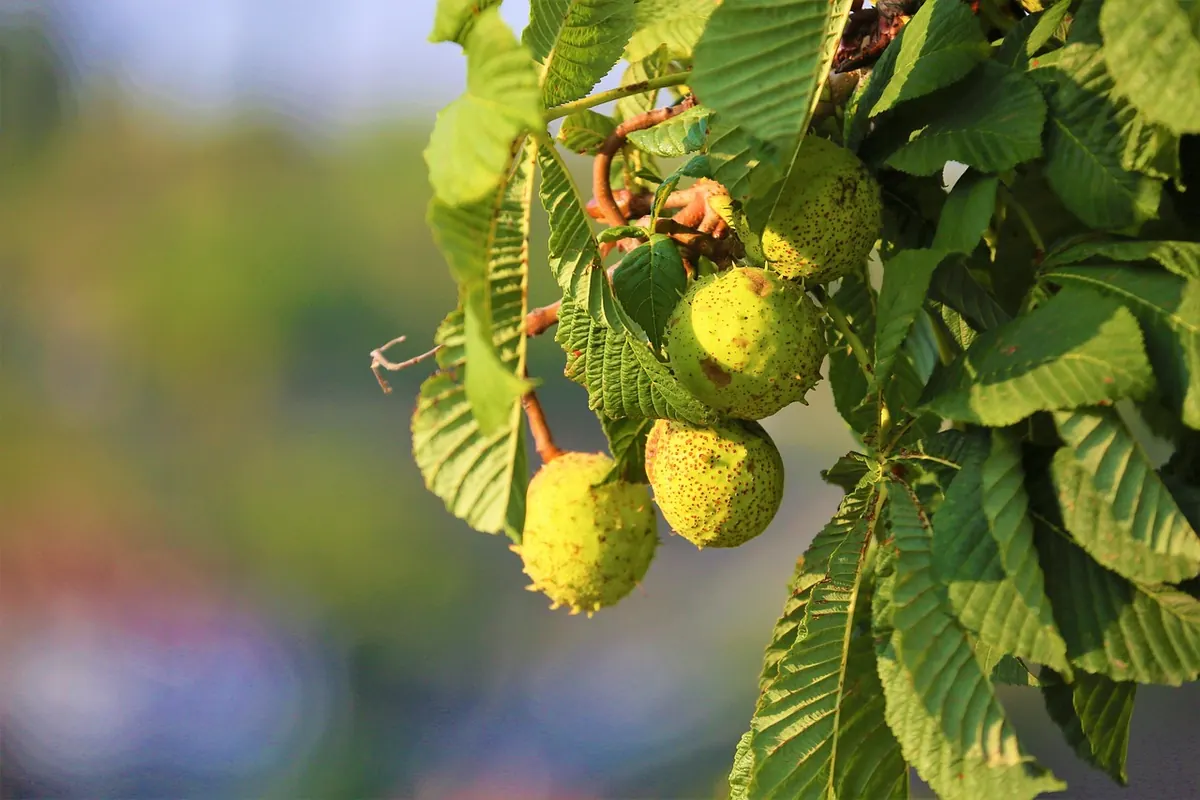
The horse chestnut is not a British tree. Aesculus hippocastanum grows wild in a small pocket of the Balkans, and it only reached western Europe in the sixteenth century. In Britain, its arrival in the early 1600s is usually credited to the Tradescant family, gardeners who collected plants from abroad and passed them round the gentry. Within a couple of generations the tree was everywhere: in parks, along avenues, in the corner of school fields.
Its wild range is tiny by comparison. The original stands cling to ravines and mountain gorges in northern Greece, Albania and North Macedonia, where the trees grow tall, flower in white candles each May and drop their spiny husks on stony ground. Almost every horse chestnut outside that region is a descendant of a handful of collected seeds — one of the most successful plant migrations in European garden history, and the reason a tree from the Pindus mountains became the standard ornament of a Victorian park and a suburban street.
The name confuses people. It is not related to the sweet chestnut, and it is not a nut you can roast. The "horse" part probably has nothing to do with feeding horses, since the seeds are toxic to them. In old plant names, "horse" often meant coarse or second-rate, the way horseradish is not real radish. Conkers contain aescin, which is why they taste bitter and why they should stay out of the kitchen. If a child or a dog does eat one, ring a health professional or your vet for advice. In dogs, the signs to watch for are drooling, vomiting, wobbliness and stomach pain; in children, sickness and a sore belly. Serious cases are uncommon because the seeds are so unpleasant that few are swallowed, but a conker is a toy, not a snack.
Conkers at War
Oddly enough, the least edible part of the tree once had an industrial career. During the First World War, Britain faced a shortage of acetone, a solvent needed to make cordite, the propellant that pushed shells out of guns. A fermentation process developed by the chemist Chaim Weizmann could produce acetone from starch, and horse chestnuts are full of it. The government duly asked schoolchildren to gather conkers by the sackful, and they did, in their millions.
How much difference it made is still argued over. Some historians suspect that a large share of the crop was never properly processed, and that the collection was as much a morale exercise as a supply measure, giving children a way to feel useful while their fathers were away. Either way, the autumn ritual of filling a bucket with conkers has a stranger history than most people realise. Before that, the nuts were used for starching linen and making a rough soap, and today horse chestnut extract turns up in creams sold for tired, heavy legs.
The Rules of the Playground
The game as we know it is not ancient. The earliest clear reference to conkers being played in Britain dates from 1848 on the Isle of Wight, and one popular theory holds that children simply swapped the hazelnuts and snail shells of older games for the new, bigger, tougher nut that had appeared in their parks. The word itself probably comes from "conqueror" — a conker that beats others conquers them.
The basic mechanics have barely changed in a century and a half. Drill a hole through the middle of the nut, thread a shoelace or a length of string through it, and knot the end so it cannot slip. One player dangles their conker at about waist height, holding the string loosely. The other takes a swing at it. Then they swap. The first conker to fall off its string, or to break apart, loses.
Everything else is negotiation. There are "stamps", where a conker that touches the ground may be trodden on by an opponent. There are free hits, foot-length limits, rules about knots and about how long a string may be. Whole school playgrounds have run on slightly different constitutions, and the first five minutes of any match are usually spent arguing about which set applies.
Every playground has its own rulebook, and no two of them agree on anything except that the other one is wrong.
Scoring gives the game its vocabulary. A conker’s rank is the number of conkers it has destroyed. Beat one and you have a "oner"; beat six and you have a "sixer", a serious piece of schoolyard property. In championship play the rule is even neater: when a conker breaks, the winner inherits the loser’s score, so a modest nut can leap from a oner to a tenner in a single clean strike.
Choosing and Hardening a Conker
Half the game is played before anyone swings anything. A good conker is small, dense and dark, and it should feel heavy for its size. Beyond that, opinion divides sharply, and some of the traditional methods are considered cheating in serious competition:
- Fresh from the husk: glossy, pale and soft. Fine for a casual game, useless against a seasoned nut.
- Left a year: the classic method. Store conkers somewhere dry and let them harden slowly. The dull, wrinkled result is the traditional champion.
- Soaked in vinegar: a widely believed shortcut. It hardens the shell slightly and smells terrible.
- Baked in the oven: banned in most school rules, and counterproductive anyway — the heat often makes the nut brittle.
- Varnished, lacquered or injected: cheating, pure and simple, and the reason championship organisers check every conker before play.
At the World Conker Championships, nuts are supplied by the organisers and selected by the players from a heap, precisely so nobody turns up with a family heirloom that has been hardening in a shed since 1998. Even so, the temptation to bend the rules has proved irresistible.
The World Conker Championships
The championships began in 1965 in Ashton, a village in Northamptonshire, when a group of anglers were rained off a fishing trip and staged a conker competition in the pub instead. It stuck. The event now draws hundreds of competitors and thousands of spectators, with players travelling from across Europe, the United States and beyond, and it has raised a substantial sum for charities for the visually impaired over the decades.
The winners are crowned King Conker and Queen Conker, and the event takes its rules seriously. Players must use conkers and laces provided on the day, hit rather than drag, and accept the drawing of lots. The seriousness is part of the joke, which is why the 2024 competition produced the most talked-about scandal in the sport’s history: the men’s champion was stripped of his title after a steel conker was found in his possession, and the crown passed to the runner-up. In the same year, the women’s title went to an American player — the first from outside Britain to take it.
A Stretch of Bad Years for the Trees
The last few decades have not been kind to the horse chestnut. In 2002 a leaf-mining moth, Cameraria ohridella, reached Britain and spread with extraordinary speed. Its larvae tunnel inside the leaves, which turn brown and crisp by August, making whole avenues look as though autumn has arrived two months early. The moth rarely kills a tree outright, but it weakens it year after year and shrinks the crop of conkers.
Worse is bleeding canker, a bacterial infection that produces oozing dark patches on the trunk and has killed large numbers of horse chestnuts since the early 2000s. Between the two, the trees that supply the whole game have had a difficult generation, and some familiar avenue plantings have been felled and replaced. The conker season still arrives every autumn, but it is a thinner affair than it was when today’s grandparents were filling their satchels.
Bans, Goggles and the Great Myth
Conkers has been declared dead many times. Schools have banned it over fears of bruises, nut allergies and arguments; headlines in the 2000s claimed children were being ordered to wear goggles and gloves. The Health and Safety Executive has spent years patiently pointing out that it has never demanded any such thing, and even issued cheerful statements confirming that conkers, played sensibly, is a perfectly ordinary playground game. The "conker ban" is one of the most recycled stories in British journalism, and it says less about the game than about our appetite for stories in which something harmless has been outlawed.
The truth is more mundane. Some schools restrict conkers because of genuine risk of injury or because a minority of children will use them as missiles. Most simply let children get on with it.
Why It Endures
It is hard to think of another game that requires no equipment beyond a tree, a lace and a willingness to lose. Conkers costs nothing, has no screen, lasts a season and can be played by a seven-year-old against a seventy-year-old on roughly equal terms. It rewards patience, a good eye and a certain amount of nerve. And it comes back every year without being asked, dropped by the sackful on pavements and playing fields, waiting for someone to find a good one and start the arguments all over again.
Photo: Konevi / Pixabay